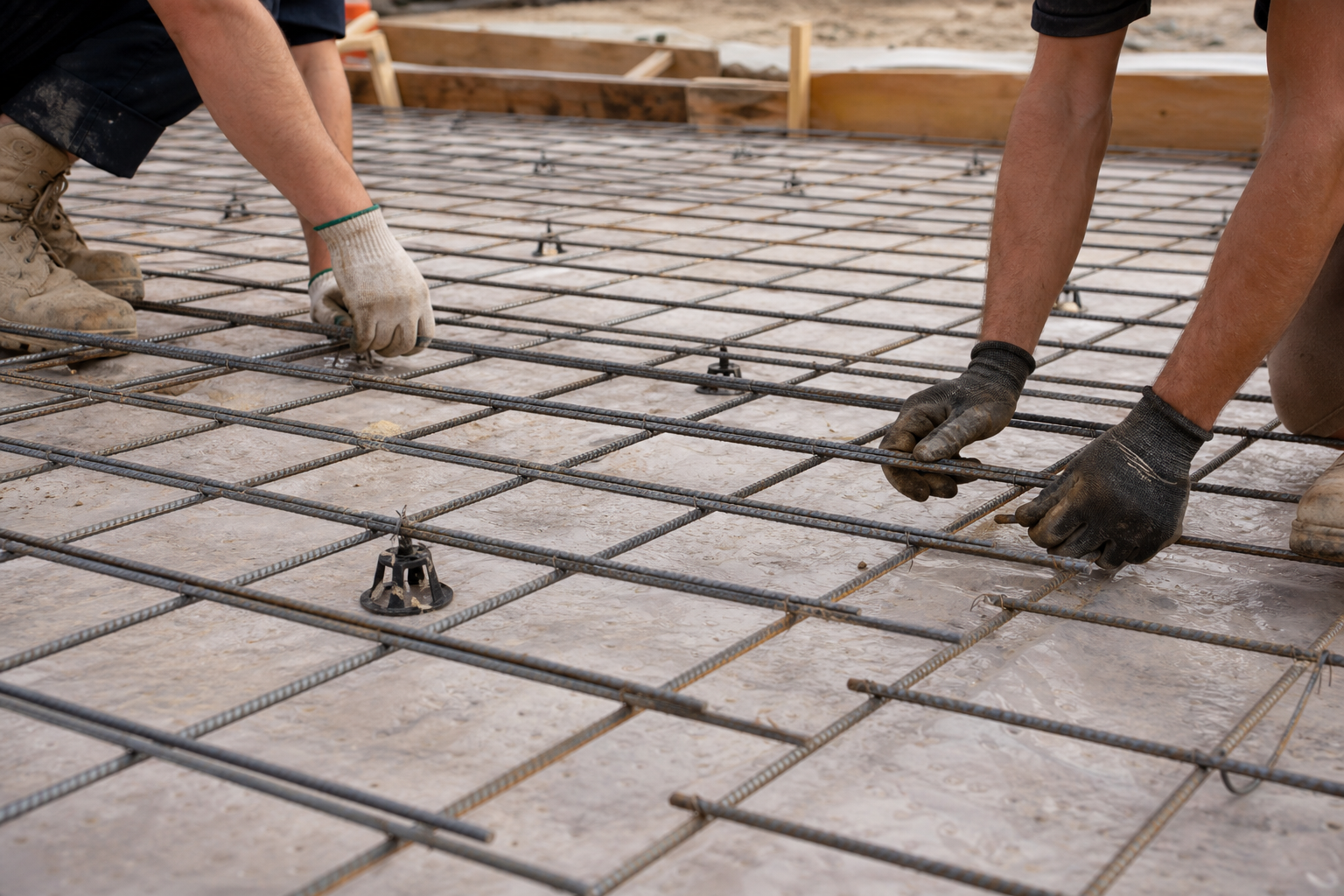
Steel mesh installation provides efficient distributed reinforcement for slabs-on-ground, pavements, tilt panels, and thin structural toppings. Konstruct Steel Fixing PTY LTD supplies experienced mesh crews who lay, overlap, chair, and secure sheet mesh to engineer specifications — maintaining cover, edge details, and sheet continuity so concrete performs as designed across residential, commercial, and civil projects in South Australia.
Professional Mesh Laying for Concrete Slabs and Pavements
Welded steel mesh distributes reinforcement across large flat areas more quickly than individual bars, making it the preferred solution for ground slabs, driveways, footpaths, warehouse floors, and pavement bases. However, mesh only performs when sheets are correctly oriented, lapped the required distance, elevated to design cover, and restrained against movement during the pour. Poor mesh installation — sheets riding on the ground, insufficient overlap, or mesh bridging across control joints — is a common source of cracking and warranty disputes.
Konstruct Steel Fixing treats mesh work as a specialist discipline distinct from bar fixing. Our mesh crews understand sheet nomenclature (SL, RL, and F-series designations), the difference between square and rectangular mesh, and the chairing strategies appropriate for various slab thicknesses and subgrade conditions encountered across Adelaide and regional SA.
Mesh Types and Applications
Mesh specification is driven by slab thickness, loading, and exposure classification. We install mesh from schedules issued by structural engineers and verify that delivered product matches the specified designation before laying commences.
- SL mesh for residential slabs, garages, and light commercial floors
- RL mesh for heavier loading, industrial pavements, and carparks
- F-series fabric for specific engineering applications and thin toppings
- Sheet layout optimisation reducing waste and unnecessary cuts
- Edge and penetration detailing around services and formwork rebates
- Integration with bar reinforcement at thickenings and localised zones
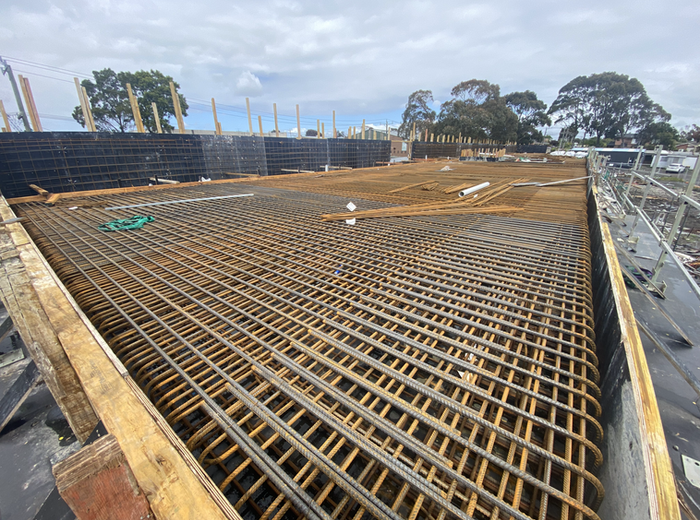
Cover is non-negotiable. Mesh lying directly on plastic membrane or blinding may satisfy a casual inspection but fails to provide the designed cover once concrete is placed. We chair mesh consistently using bar chairs, bolsters, or proprietary support systems matched to the specified bottom cover — typically 20 mm to 40 mm depending on slab type and exposure.
Our Mesh Installation Process
Mesh installation follows a logical sequence that integrates with formwork, membrane placement, and pour preparation. Konstruct Steel Fixing coordinates each step with the builder or leading hand to avoid duplication of effort and to ensure the slab is pour-ready when our crew demobilises.
Site Preparation and Layout
Before mesh sheets arrive, we confirm the slab footprint is formed, cleaned, and free of obstructions. Vapour barrier or damp-proof membrane, where specified, must be intact. We establish layout from survey lines or setout marks, orienting sheets so the main wire direction matches the structural drawing. Sheets are typically laid in a staggered pattern with overlap at all joints — usually one mesh pitch or as nominated on the schedule.
Chairing, Spacing, and Edge Treatment
Chairs are placed at centres that prevent mesh sagging between supports, accounting for worker traffic during the pour. At slab edges, mesh terminates with the required cover to formwork — not flush against the form face unless the detail explicitly requires it. Around column bases, sumps, and slab penetrations, we cut and tie mesh neatly rather than leaving loose tails that float during vibration. Where mesh transitions to bar reinforcement at thickenings or step footings, our crew integrates both systems with lapped connections as detailed.
Securing Mesh Before the Pour
Unsecured mesh shifts when workers walk on it or when concrete is discharged from the chute. We tie overlapping sheets at intervals along the lap, peg mesh on ground slabs where wind uplift is a concern, and coordinate with the concreting gang on pump hose routing to minimise disturbance. On sloped pavements and driveways, additional fixity prevents mesh sliding downhill during placement.
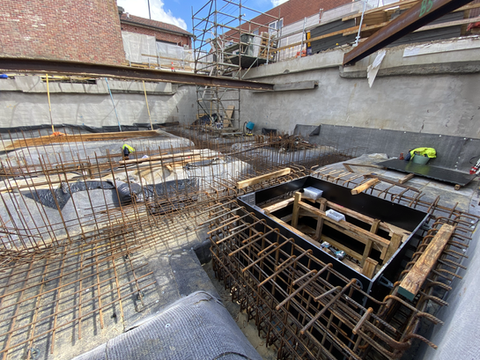
Residential, Commercial, and Civil Mesh Work
Residential builders across Adelaide's growth corridors rely on us for house slabs, alfresco extensions, and garage floors where speed and consistent cover matter. Commercial clients engage us for warehouse floors, retail tenancies, and carpark pavements where RL mesh and heavier chairing are standard. Civil contractors call on our mesh crews for footpaths, shared paths, kerb backing, and minor pavement works under local government specifications.
Each sector brings different inspection expectations. Volume housing may require building surveyor sign-off before pour. Council work often follows DIT or municipal standard drawings with hold points documented in the quality plan. We adapt our inspection preparation accordingly.
Mesh Supply Coordination
Konstruct Steel Fixing can install client-supplied mesh or coordinate supply through our network of Adelaide reinforcement merchants. When we manage supply, quantities are taken off from the drawing with sensible lap allowances and contingency for offcuts at penetrations. Delivery is timed to site access and cranage availability — mesh sheets are bulky and require flat storage away from mud and standing water.
If your project uses prefabricated mesh panels or special sizes, lead times may affect programme. We flag supply risks at tender stage so procurement does not become a critical path surprise.
Quality Checks Before Concrete Placement
Our foreman completes a pre-pour checklist covering mesh type verification, overlap width, chair spacing, edge cover, cleanliness, and integration with cast-in services. Deficiencies are corrected before the inspector arrives. This disciplined approach reduces the embarrassment and delay of failed hold points on pour day.
Planning a mesh slab or pavement? Send your structural drawing or standard detail to info@konstructsteelfixing.com or phone 08 7097 1159. Our estimators will confirm mesh designation, approximate sheet count, chairing requirements, and crew duration. Request a quote online for faster turnaround on straightforward residential and commercial slabs.
Mesh Versus Bar — Making the Right Choice
Structural engineers select mesh where distributed reinforcement suits the loading and geometry of the element. Localised heavy reinforcement — around columns, at cantilevers, or in deep beams — remains the domain of bar fixing. Konstruct Steel Fixing offers both capabilities and can mobilise combined crews when your slab requires mesh in the field with bar at thickenings and edges.
Choosing a contractor who understands both systems eliminates coordination gaps at the interface zones where most installation errors occur. For dependable steel mesh installation across South Australia, contact Konstruct Steel Fixing PTY LTD at our Magill office and speak with our team about your next slab or pavement package.