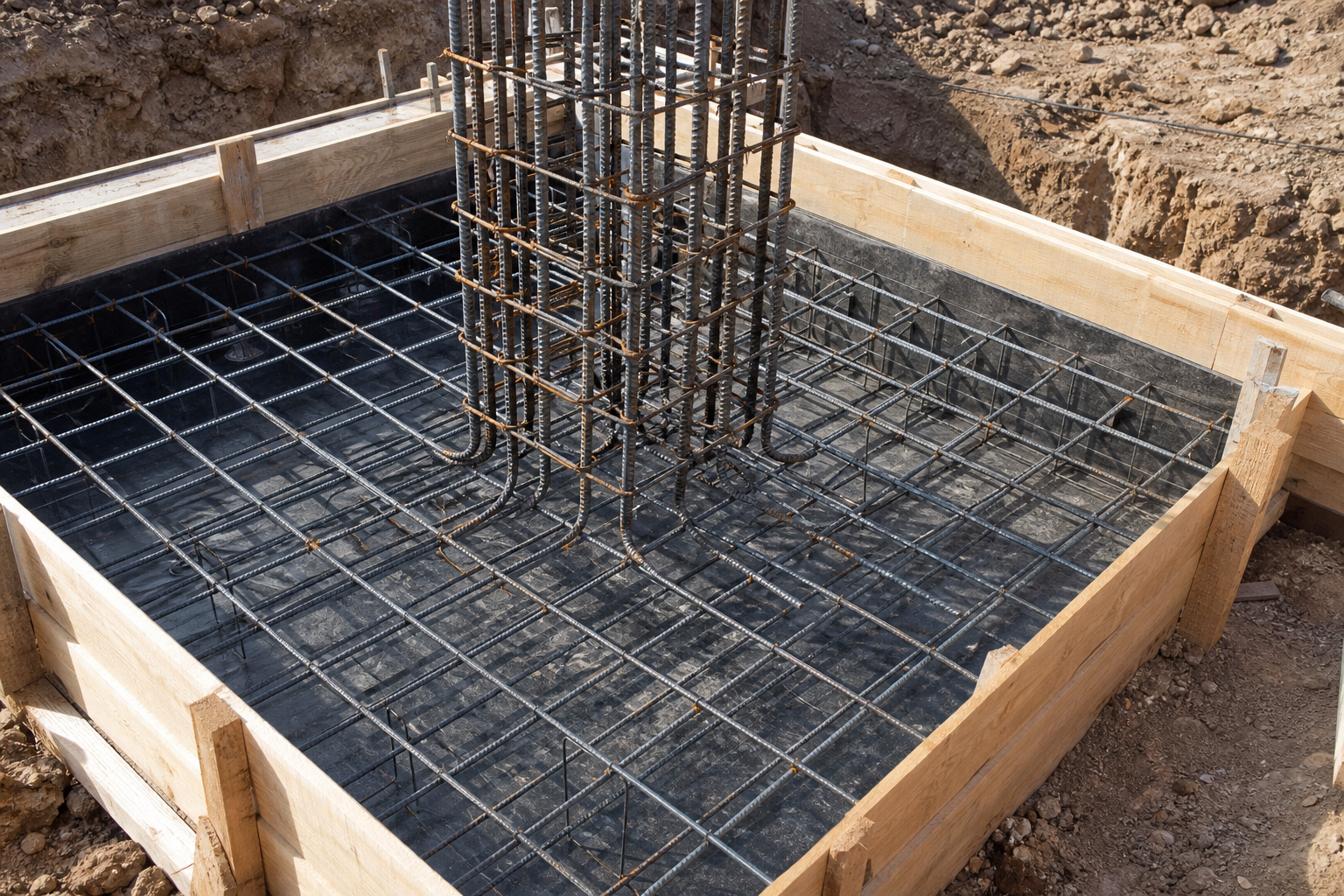
Reinforcement bar placement and tying is the foundation of structural steel fixing. Konstruct Steel Fixing PTY LTD supplies skilled crews who cut, bend, position, and secure deformed reinforcing bar to engineer-approved layouts — ensuring every lap, chair, and cover dimension meets the structural drawing and Australian Standards before concrete is placed.
Specialist Bar Fixing for Structural Concrete
Deformed reinforcing bar transfers tensile forces within concrete elements. When bars are misaligned, laps are short, or tie wire is insufficient, the composite action of reinforced concrete is compromised. Our bar fixing teams treat each element — whether a domestic footing cage or a heavily congested transfer beam — with the same disciplined approach: read the drawing, set out from established benchmarks, install chairs and spacers, place bar in sequence, tie at specified intervals, and verify cover before requesting inspection.
Konstruct Steel Fixing operates from Magill in Adelaide's eastern suburbs and deploys bar fixers across metropolitan and regional South Australia. We work on projects where the builder or head contractor requires a dedicated reinforcement subcontractor rather than allocating bar work to general labourers without trade-specific experience.
Bar Types and Grades We Install
Our crews are experienced with standard AS/NZS 4671 reinforcing bar in grades and diameters commonly specified in Australian structural design. We also handle project-specific requirements including epoxy-coated bar in aggressive environments, stainless steel reinforcement near marine interfaces, and galvanised bar where durability specifications demand it.
- N12 through N40 deformed bar in footing cages, slabs, beams, and columns
- Ligatures and fitments for beams, columns, and pile caps
- Starter bars and dowels for construction joints and future connections
- Cranked and bent bar for stairs, ramps, and thickened slab edges
- Mechanical couplers and threaded systems where lapping is impractical
- Chair and spacer systems maintaining bottom, top, and side cover
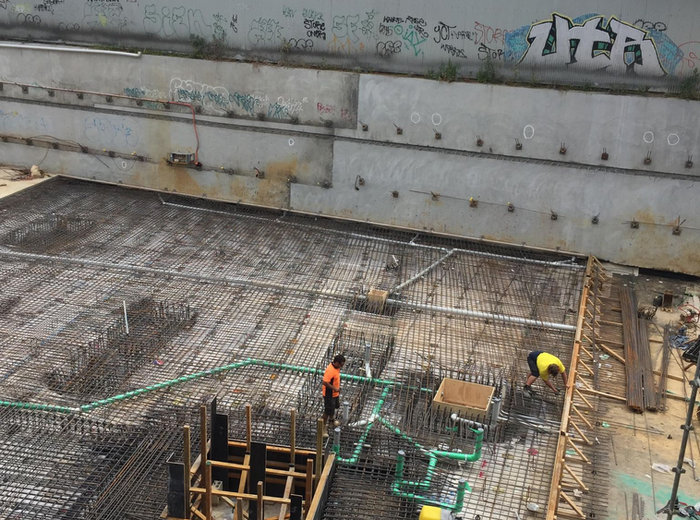
Accuracy before the pour. Concrete is unforgiving — once placed, misplaced reinforcement is extraordinarily expensive to correct. Our supervisors walk every package with the bar schedule and marking plan, checking lap lengths against AS 3600 and project-specific amendments before calling for engineer or building surveyor sign-off.
Scope of Bar Placement and Tying Work
Bar fixing scope varies significantly between a residential strip footing and a commercial post-tensioned slab. The sections below outline typical inclusions when Konstruct Steel Fixing is engaged for bar work. Final scope is always confirmed against tender documents and issued for construction drawings.
Footings and Ground Beams
Pad footings, strip footings, raft slabs, and ground beam cages form the base of most structures. We set out from survey pegs, assemble cages on chairs or off-site where practical, and tie longitudinal and transverse bar at centres shown on the footing schedule. Edge distances, crank details at steps, and dowels into columns or walls are installed before formwork closure. On reactive soil sites common across Adelaide's outer suburbs, we pay particular attention to footing depth transitions and the reinforcement continuity required at step locations.
Suspended Slabs and Beams
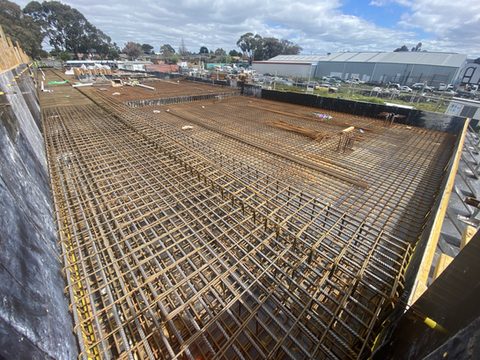
Suspended slab work involves bottom reinforcement, top reinforcement, edge bars, and often beam cages dropped before or after slab mat installation. Our teams coordinate with formwork contractors on pour strip sequencing, bar support systems for top mat stability, and the temporary propping assumptions that affect when top steel can be placed. Congested beam-column joints receive additional supervision to ensure fitments and main bars maintain the designed load path without clashes that prevent concrete flow.
Columns, Walls, and Vertical Elements
Vertical reinforcement requires plumb cages, correct splice locations, and tie spacing that prevents bulging under concrete pressure. We install column cages from footing starters or coupler levels, fit ligatures at specified spacing, and align starter bars for upper levels on multi-storey builds. Core walls and shear walls on tower projects demand particular care around openings, coupler zones, and the alignment of vertical bar with floor-level horizontal distribution steel.
Tying Standards and Fixity
Tie wire is not merely a convenience — it secures bar against displacement during concrete placement, vibration, and worker traffic on the deck. Konstruct Steel Fixing uses appropriate tie patterns at intersections: saddle ties at orthogonal crossings, figure-eight ties where rotation must be prevented, and additional fixity at free ends and lap zones. Tie spacing follows project specifications, typically every intersection on bottom mat and at specified intervals on top mat and vertical elements.
We also install proprietary fixing clips and speed ties where specified, and coordinate with suppliers of prefabricated cages or bent bar delivered to site. When cages arrive pre-assembled, our role may shift to placement, alignment, bracing, and integration with adjoining in-situ bar — still requiring trade expertise to maintain structural intent.
Documentation, Inspection, and Coordination
Bar fixing does not occur in isolation. Our foremen attend site meetings, review drawing revisions, and raise RFIs when bar schedules conflict with architectural setouts or services penetrations. Before each pour hold point we prepare the reinforcement for inspection — clearing debris, ensuring chairs are stable, and marking any site-driven variations against the issued schedule.
Where projects require photographic records or as-built mark-ups, we cooperate fully. On government and tier-one commercial work, independent inspection is common. We welcome scrutiny because it validates the workmanship our clients expect from a specialist steel fixing contractor.
Coordination with Other Trades
Successful bar fixing depends on upstream and adjacent trades. Formwork must be set to line and level before bottom mat installation. Surveyors must provide reliable benchmarks. Services conduits and cast-in items must be positioned before top steel closes the deck. Konstruct Steel Fixing communicates pour readiness honestly — if upstream work is incomplete, we flag it early rather than installing steel that must be disturbed later.
Request a bar fixing quote. Provide structural drawings, bar schedules, and pour dates to our estimators at info@konstructsteelfixing.com or call 08 7097 1159. For formal tender submissions, use our online quote request form. We service Adelaide, the Adelaide Hills, and regional South Australia with crews sized to your programme.
Why Dedicated Bar Fixers Matter
Reinforcement bar work is a recognised trade skill in the Australian construction industry. Experienced bar fixers read schedules efficiently, anticipate clashes, and maintain productivity without sacrificing tie quality. Assigning bar work to unskilled labour may appear economical initially, but rework, inspection failures, and pour delays quickly erode any saving.
Konstruct Steel Fixing invests in capable foremen and fixers who understand the structural purpose of the steel they install — not just the geometry on the page. That understanding shows in cleaner cages, fewer RFIs, and decks cleared on programme. When your next project requires dependable reinforcement bar placement and tying, contact our Magill office to discuss scope, availability, and pricing.