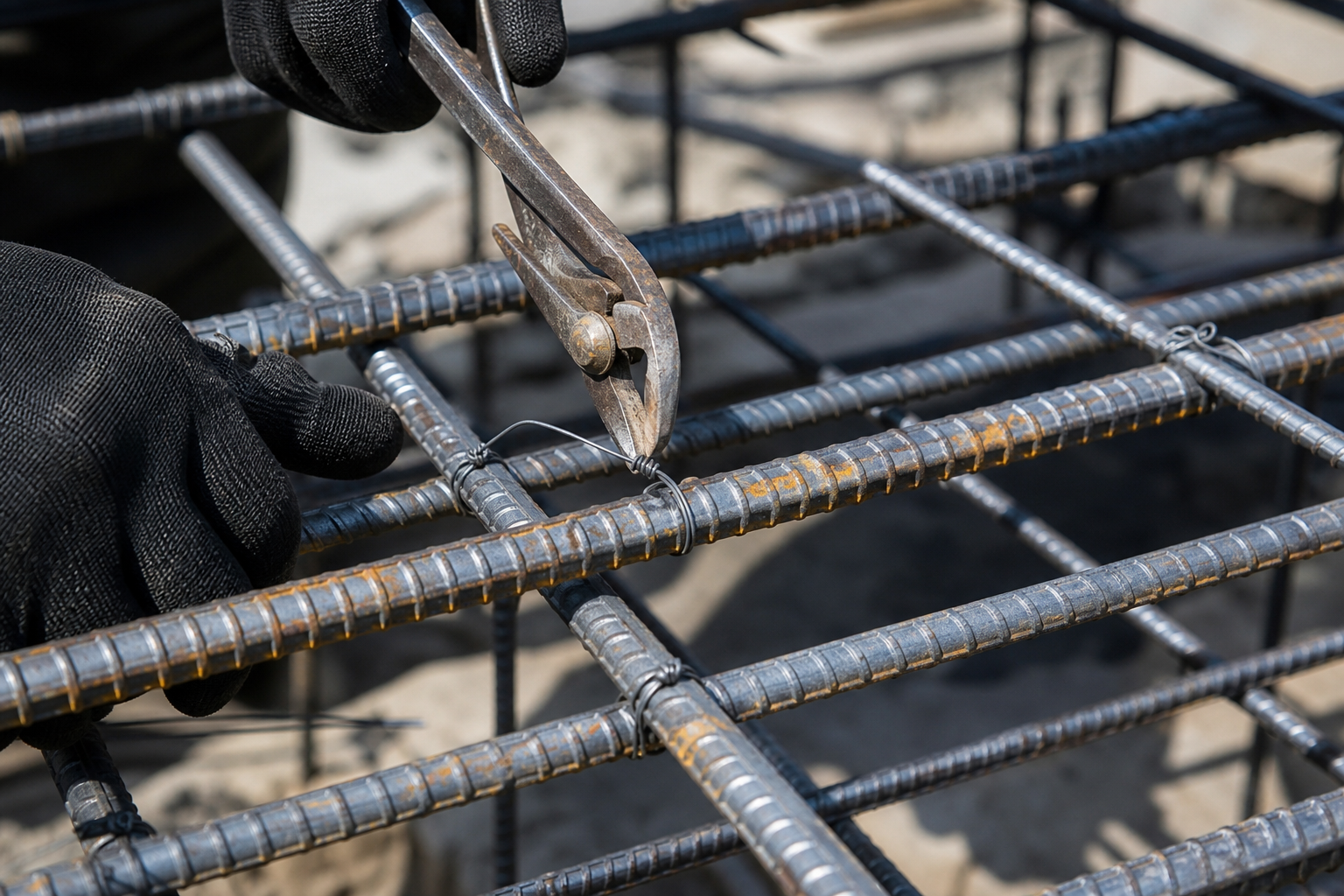
Konstruct Steel Fixing PTY LTD delivers comprehensive steel fixing services across commercial, residential, and civil construction in South Australia. The following outlines the technical scope, fixing methods, and project types within which Konstruct Steel operates — from reinforcement bar tying and mesh installation through to complex structural elements on high-rise and infrastructure works.
Reinforcement Bar Placement and Tying
Bar fixing forms the core capability of Konstruct Steel. Crews interpret bar schedules and structural drawings to position reinforcement in footings, slabs, beams, columns, walls, and specialised elements such as transfer structures and cantilevered components. Work includes handling deformed bar in grades and diameters nominated by the project engineer, typically in accordance with AS/NZS 4671, and fixing to AS 3600 and project-specific requirements.
Fixing operations cover straight bars, bent bars, and shaped reinforcement cut and bent to schedule or supplied pre-bent from the merchant. Tying is performed using annealed tying wire and/or proprietary clip systems compatible with the bar diameter and spacing specified. Intersection ties, saddle ties, and figure-eight configurations are applied as appropriate to maintain bar position during concrete placement and vibration. Starter bars, dowels, and lap splices are installed at construction joints with lap lengths verified against the structural engineer's details.
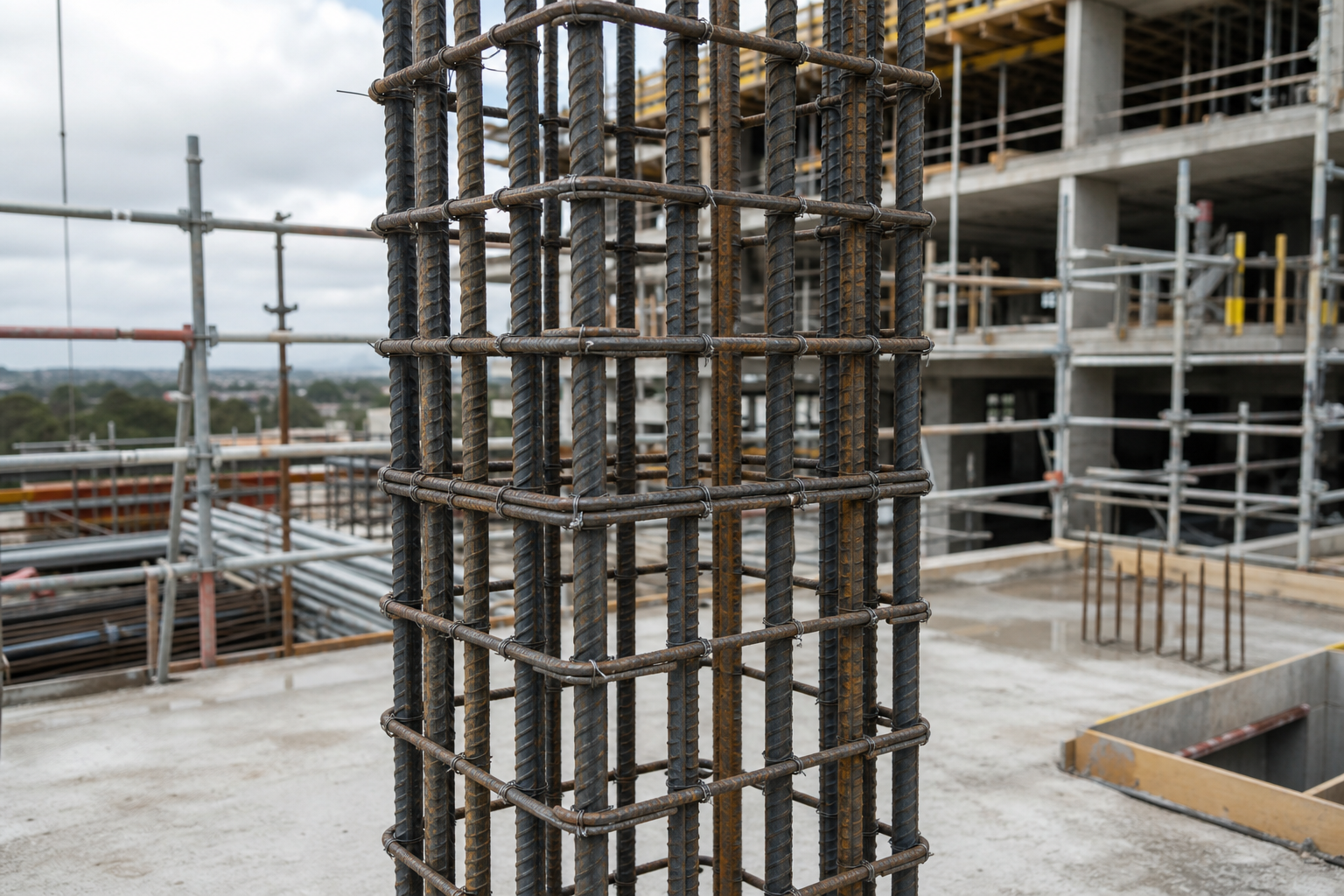
On larger packages, bar fixing is sequenced to align with formwork progression — bottom reinforcement in slabs before top mat installation, column and wall cages before pour, and continuity reinforcement at floor levels on multi-storey structures.
Bar Support, Cover, and Alignment
Achieving specified concrete cover is integral to durable reinforcement performance. Konstruct Steel installs plastic and steel chairs, bar supports, and spacers at centres and heights nominated in the project specification or standard detail drawings. Bottom mat support in suspended slabs, edge bar positioning, and top mat separation using bar chairs or continuous support systems are completed before pre-pour inspection.
Bar alignment — including spacing, lap stagger, and hook orientation — is checked against the issued drawings. Where congestion occurs at beam-column junctions, pile caps, or core walls, fixers work methodically to maintain constructability without compromising design intent, escalating clashes to site engineering when resolution is required prior to pour approval.
Steel Mesh Installation
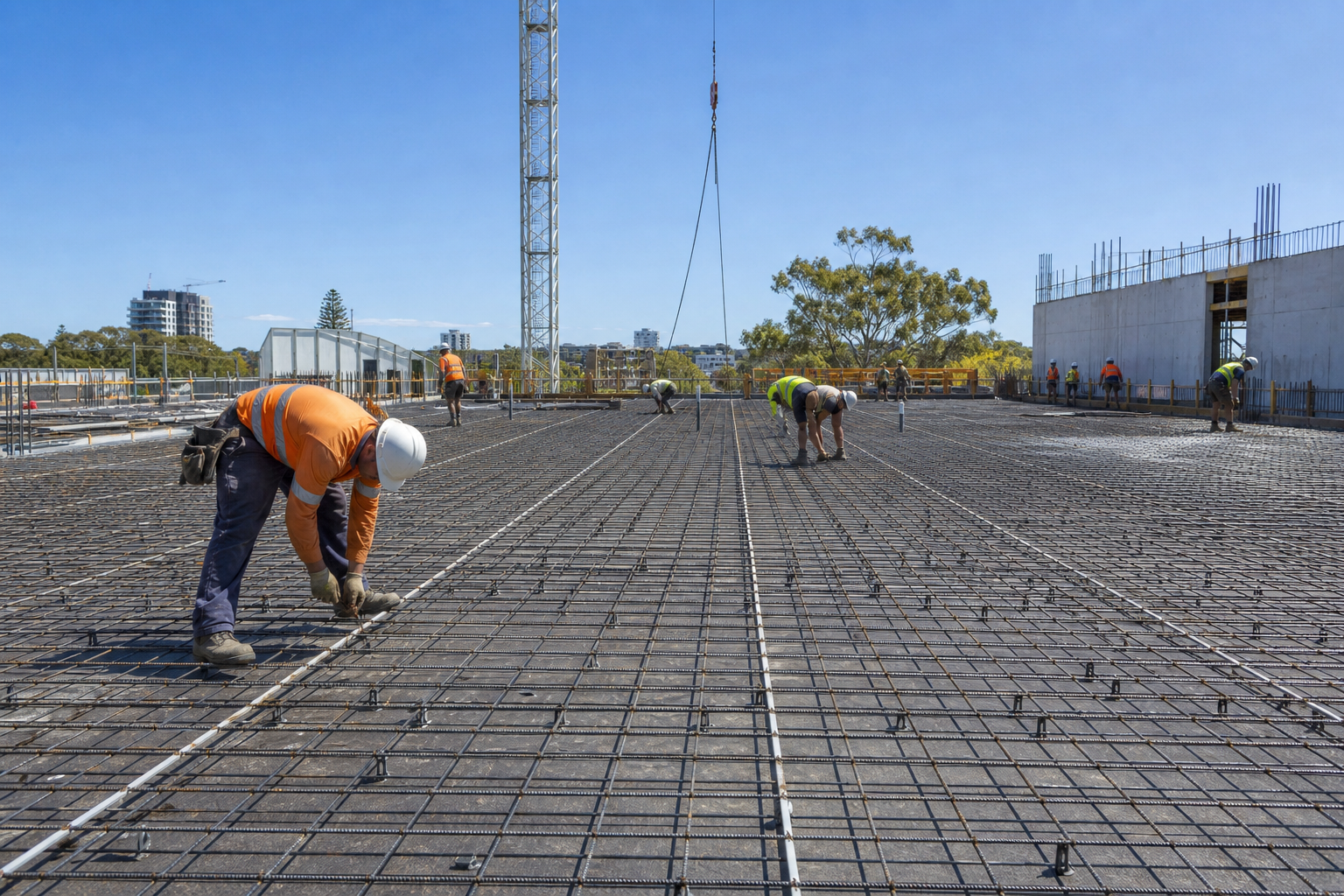
Steel mesh fixing covers the supply of labour to lay, lap, and secure mesh sheets in ground slabs, suspended slabs, pavement, and topping applications. Konstruct Steel works with standard sheet sizes — commonly SL and RL designations — and installs mesh with laps, edge distances, and penetration treatments as specified on the reinforcement layout drawings.
Mesh sheets are positioned to maintain cover above substrate or formwork, with laps overlapped by the nominated length and tied at intervals sufficient to prevent movement during concrete placement. At slab edges, openings, and service penetrations, mesh is cut and bent to maintain continuity where the design requires it, or terminated at edges where detail drawings indicate. Coordination with vapour barriers, waterproofing membranes, and under-slab services is observed so that mesh installation does not compromise adjacent trade work.
On large floor plates, mesh fixing is planned in zones to match concrete pour boundaries. Sequencing may integrate with pump line locations, construction joint positions, and day-pour limits defined by the head contractor.
Structural Documentation. All mesh and bar work is executed against issued for construction drawings, bar schedules, and engineer's details. Konstruct Steel does not alter specified reinforcement without written direction from the project engineer or certifier. Discrepancies between schedules and layouts are raised as RFIs before fixing proceeds.
Structural Elements
Structural steel fixing spans the full range of reinforced concrete elements encountered on building and civil projects. Konstruct Steel undertakes fixing in the following categories, among others:
- Footings and ground beams — strip, pad, and raft footings; ground beams linking pad footings; edge beams and thickenings; pile caps with pile top reinforcement integration.
- Suspended slabs — one-way and two-way slab systems, flat slabs, band beam slabs, and transfer slabs requiring dense reinforcement and careful chairing.
- Columns and walls — vertical reinforcement, ties and ligatures at specified spacing, wall mesh or bar layers, and construction joint treatment at floor levels.
- Stairs and ramps — waisted slabs, landing reinforcement, and connection detailing to adjacent structural elements.
- Retaining and basement structures — walls, kickers, and waterstop coordination at reinforcement interfaces where applicable.
Each element type demands familiarity with typical detail conventions used by South Australian structural engineers — including starter bar projections, dowel embedment, and standard hook dimensions.
High-Rise Residential and Commercial
High-rise and multi-level construction introduces programme repetition, vertical logistics, and coordination complexity that differ materially from single-level projects. Konstruct Steel provides steel fixing services on residential towers, mixed-use developments, and commercial multi-storey buildings where reinforcement is installed level by level in coordination with formwork cycles.
Typical scope on tower projects includes deck reinforcement, column and wall vertical steel between floors, core reinforcement, and continuity at jump-form or climbing formwork transitions. Crew sizes and output rates are planned against the head contractor's cycle time targets.
Safety and access requirements on elevated levels are integrated into daily planning. Konstruct Steel participates in the principal contractor's site induction and complies with project-specific SWMS for work at height and manual handling of bar bundles.
Civil Infrastructure and Council Roads
Civil steel fixing capability extends to infrastructure works delivered for councils, state authorities, and civil contractors. Assignments include road pavement reinforcement, kerb and channel cages, footpath and shared-path slabs, culvert inverts and surrounds, pipe encasement, and bridge approach structures. Documentation on civil packages often references Main Roads or council standard drawings in addition to project-specific engineering.
Civil sites frequently involve working alongside earthworks, drainage installation, and traffic management plans. Reinforcement is fixed in open trench, pit, or pavement conditions with attention to substrate preparation, chairing on compacted base, and protection from contamination prior to concrete or asphalt placement. Programme windows on road projects can be constrained by lane closures and weather; Konstruct Steel mobilises crews accordingly and communicates progress against the agreed civil construction schedule.
Whether the project is a suburban street upgrade, stormwater infrastructure package, or commercial carpark slab on grade, the same standards of lap length, cover, and tie quality applied to building work govern civil reinforcement installation. The company welcomes civil scope within its South Australian operating area and quotes from issued civil engineering drawings and quantity schedules.
Capabilities described on this page represent the steel fixing labour and installation scope delivered by Konstruct Steel Fixing PTY LTD. Enquiries should include current drawings, programme outline, and site location to enable accurate assessment of resources and pricing.
Resource Planning and Mobilisation
Capability on paper means little without the right crew size, supervision and equipment on site. Konstruct assesses each package for fixing complexity, access method, inspection frequency and programme duration before confirming mobilisation — allocating leading hands with experience matched to the work type, whether that is civil corridor fixing, tower deck cycles, or industrial mesh fields. Tooling, tying wire, chairs and minor consumables are supplied as part of our fixing scope unless the contract specifies otherwise.
We do not over-commit capacity to win work we cannot resource. That discipline protects your programme from the subcontractor no-show or under-crewing that disrupts pour sequences on South Australian sites. When you enquire, we tell you honestly whether we can meet your dates with the supervision standard your project requires.