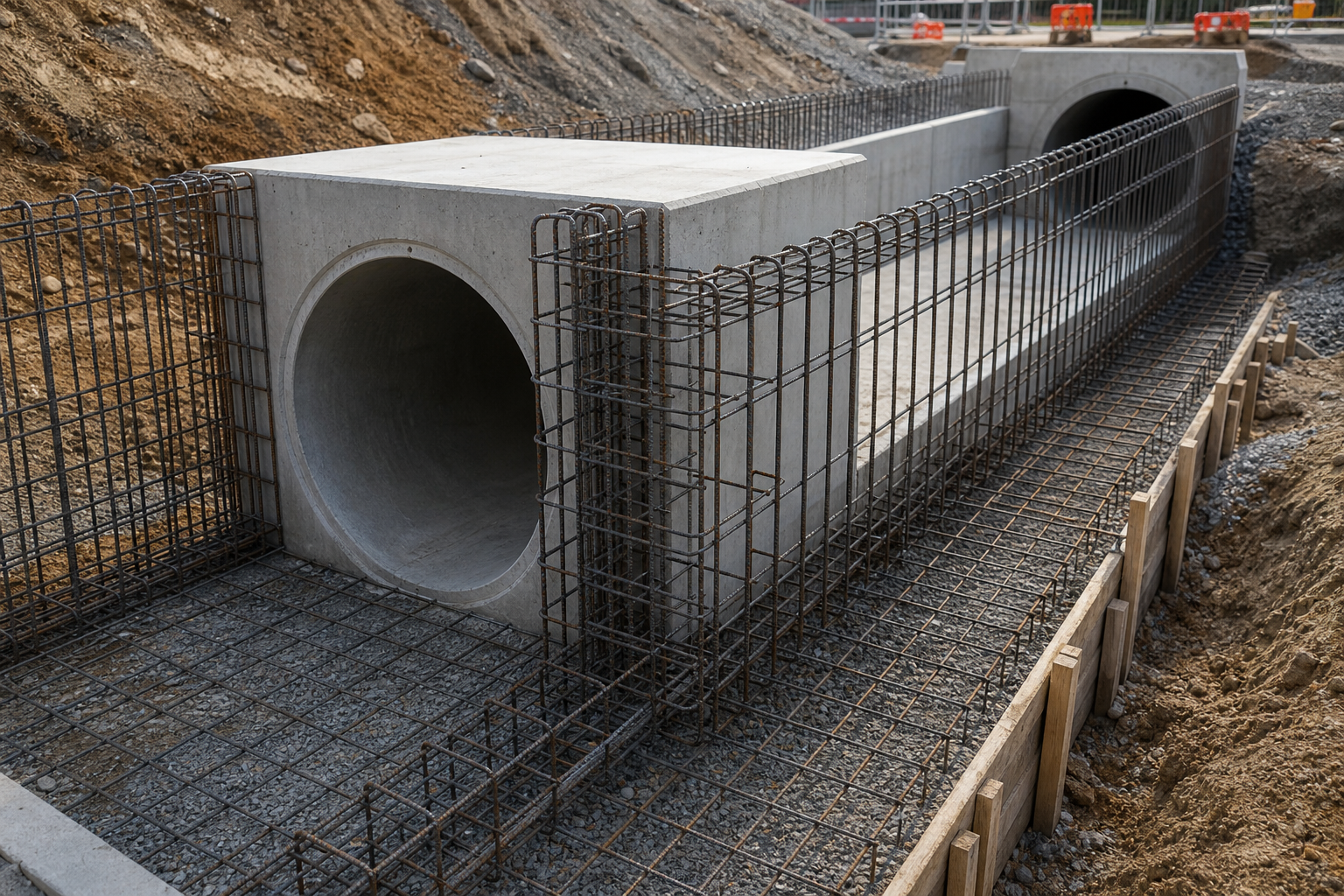
Konstruct Steel Fixing PTY LTD completed reinforcement installation for a drainage infrastructure upgrade in Tea Tree Gully — supplying pit, headwall and channel steel fixed to council engineering standards and the project structural schedules.
Project Overview
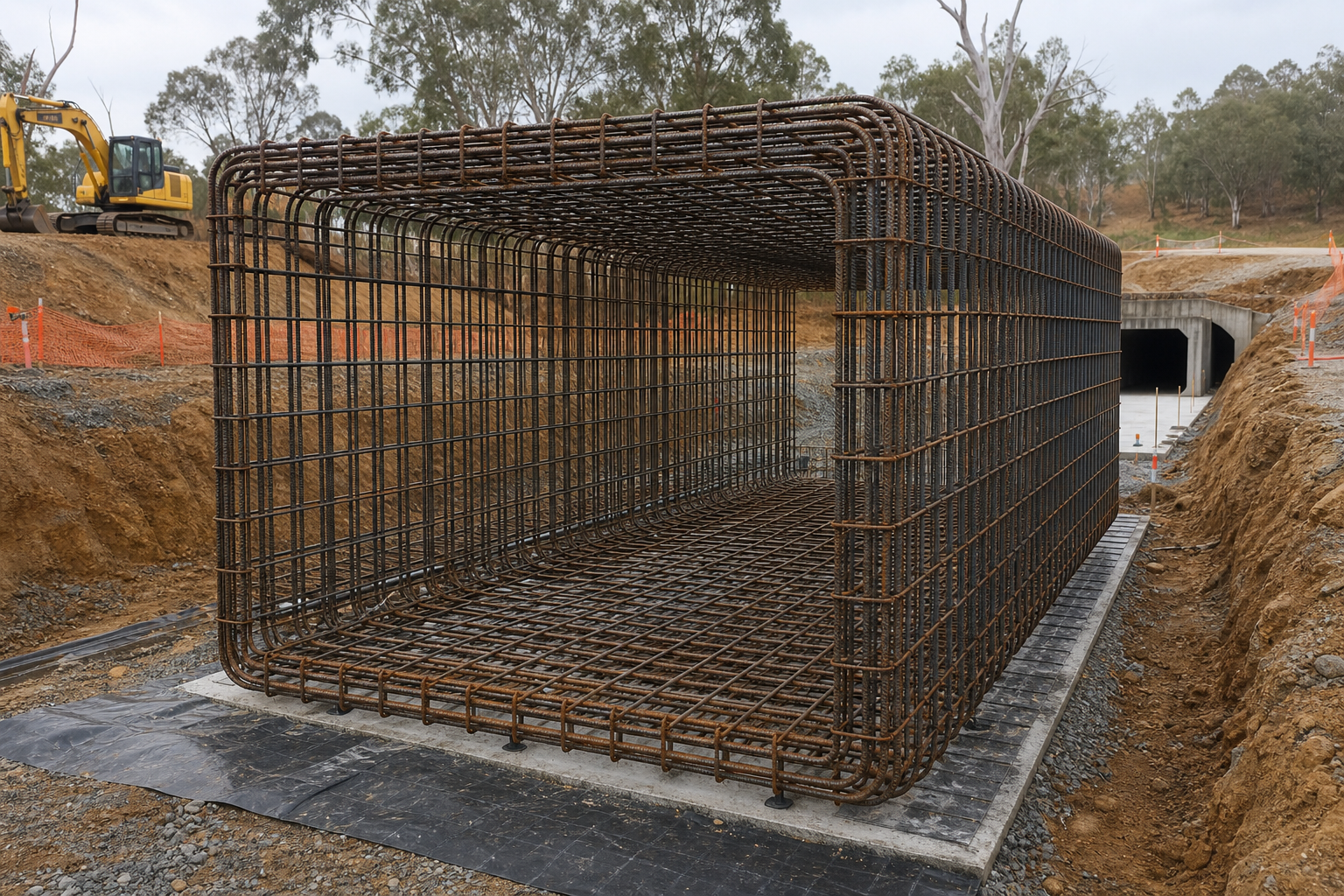
The drainage upgrade involved new and renewed pit structures, headwalls at pipe interfaces, and reinforced channel elements to improve stormwater capacity in the council area. Our steel fixing scope covered main bar placement and tying within pit walls and bases, headwall face reinforcement and aprons, and bar and mesh work within channel sections. Reinforcement was installed to drawing, with cover and tie patterns suited to below-ground and partially exposed durability requirements.
Challenges
Drainage structures combine tight dimensional tolerances with hydraulic and soil loading requirements — leaving little margin for bar placement error. Pit excavations were often shallow but congested with services and existing infrastructure nearby. Headwall zones required coordination with pipe set-out and formwork profiles before face bars could be tied. Weather exposure on open excavations created windows where reinforcement had to be completed and poured before ground conditions deteriorated. Council inspection hold points applied the same rigour as building work, with cover and bar spacing verified before concrete encasement.
Solutions
We sequenced steel fixing to follow excavation and formwork readiness at each structure — mobilising crews when survey set-out was confirmed and formwork was in position. Pit reinforcement was tied systematically from base to walls, with links and face bars held to cover using appropriate spacers. Headwall steel was positioned against formwork profiles and checked against pipe centreline requirements before pour approval. Channel sections received mesh and bar work with correct overlap and edge detailing. Close communication with the civil foreman and council inspector kept hold-point inspections efficient and avoided rework.
Technical Scope Detail
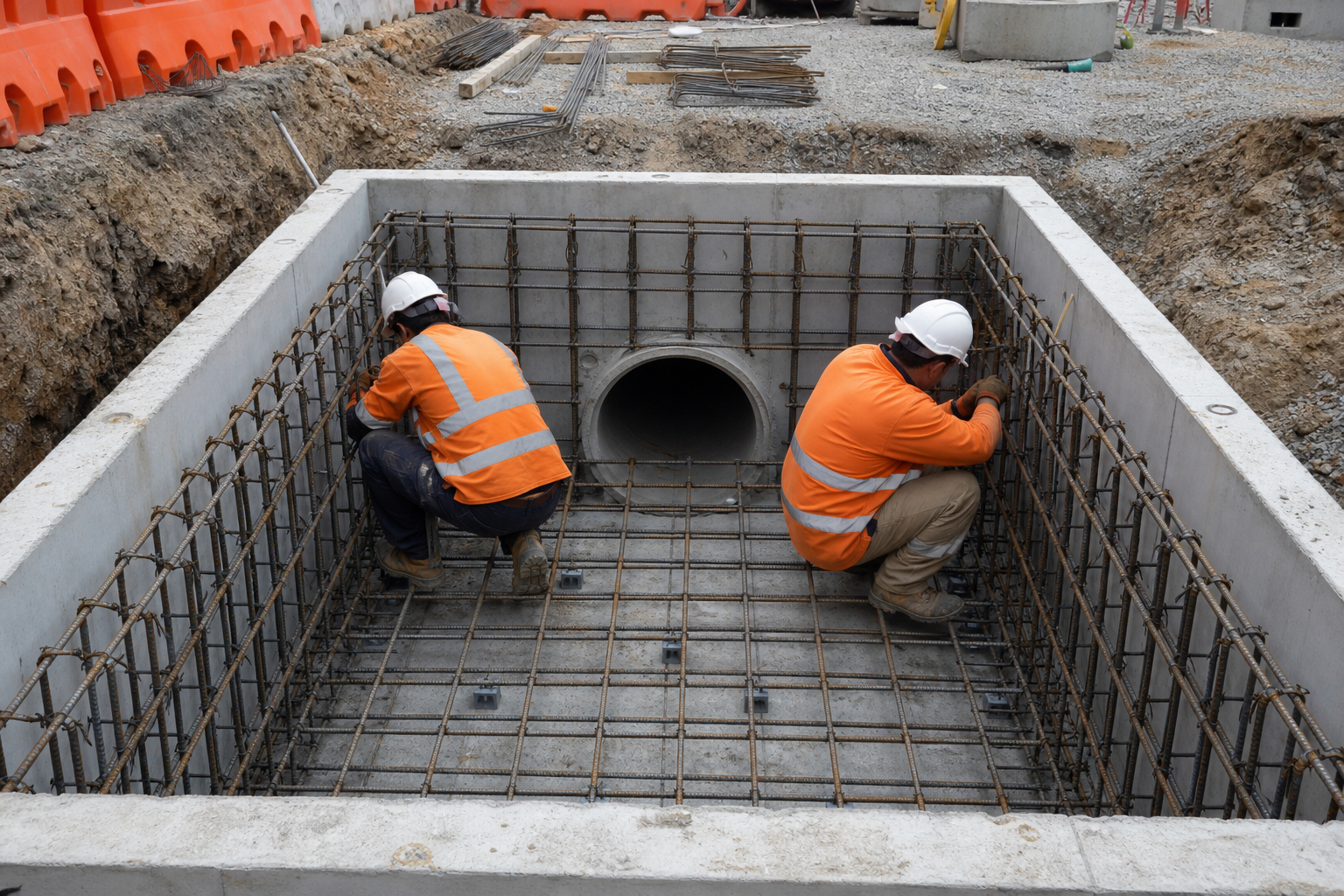
Pit structures combined base reinforcement with vertical face bars and links — tied systematically from invert to collar level with spacers maintaining cover against permanent and temporary earth faces. Headwall aprons and wing walls incorporated face reinforcement tied to structural schedule, positioned against formwork profiles and verified against pipe centreline set-out before pour approval. Channel sections received mesh and bar combinations with edge detailing at transitions into pit structures, ensuring load path continuity through the stormwater network upgrade.
Below-ground durability requirements drove cover specifications tighter than typical building slabs. We selected chair and spacer types suited to the exposure classification, with additional scrutiny at invert zones where ponding and aggressive soil conditions apply. Bar bending and hook compliance followed engineer details — drainage structures fail in service when hooks are shortcut and cover is lost at the soffit.
Quality Assurance & Inspection
Council hold points on drainage assets mirror building rigour — cover, bar spacing, tie completeness and alignment with issued details are verified before pour. We requested inspections when formwork and steel were complete, not when steel was "nearly done," respecting the limited possession windows available on open drainage excavations. Photographic records of pit invert reinforcement were supplied where the quality plan required evidence before concrete encasement.
Existing services proximity required careful excavation and fixing sequences. We did not proceed in zones where survey or potholing had not confirmed clearance — fixing reinforcement against assumed service locations is how drainage upgrades become emergency repair jobs. Coordination with the civil superintendent on service clearance was part of our daily pre-start routine on this package.
Coordination With the Principal Contractor
Drainage upgrades proceed structure by structure — pit, headwall, channel length — with weather and groundwater influencing daily productivity. We maintained flexible crew sizing, mobilising additional fixers when multiple structures were ready simultaneously and scaling back when excavation or formwork lagged. That responsiveness kept the civil programme from developing a reinforcement bottleneck across the Tea Tree Gully upgrade corridor.
Outcomes
All drainage structures received reinforcement fixed to council specification and cleared for concrete placement at each hold point. The upgrade programme progressed without steel-fixing delays to the civil construction sequence. Completed pit, headwall and channel elements provide durable structural support for the upgraded stormwater network in Tea Tree Gully — installed with the accuracy and compliance discipline required on council-managed civil infrastructure projects across metropolitan Adelaide.
Key Outcome
Drainage upgrade reinforcement delivered across pits, headwalls and channels — fixed to council engineering standards, inspection-approved at each hold point, and completed within the civil programme on an open-corridor drainage site.