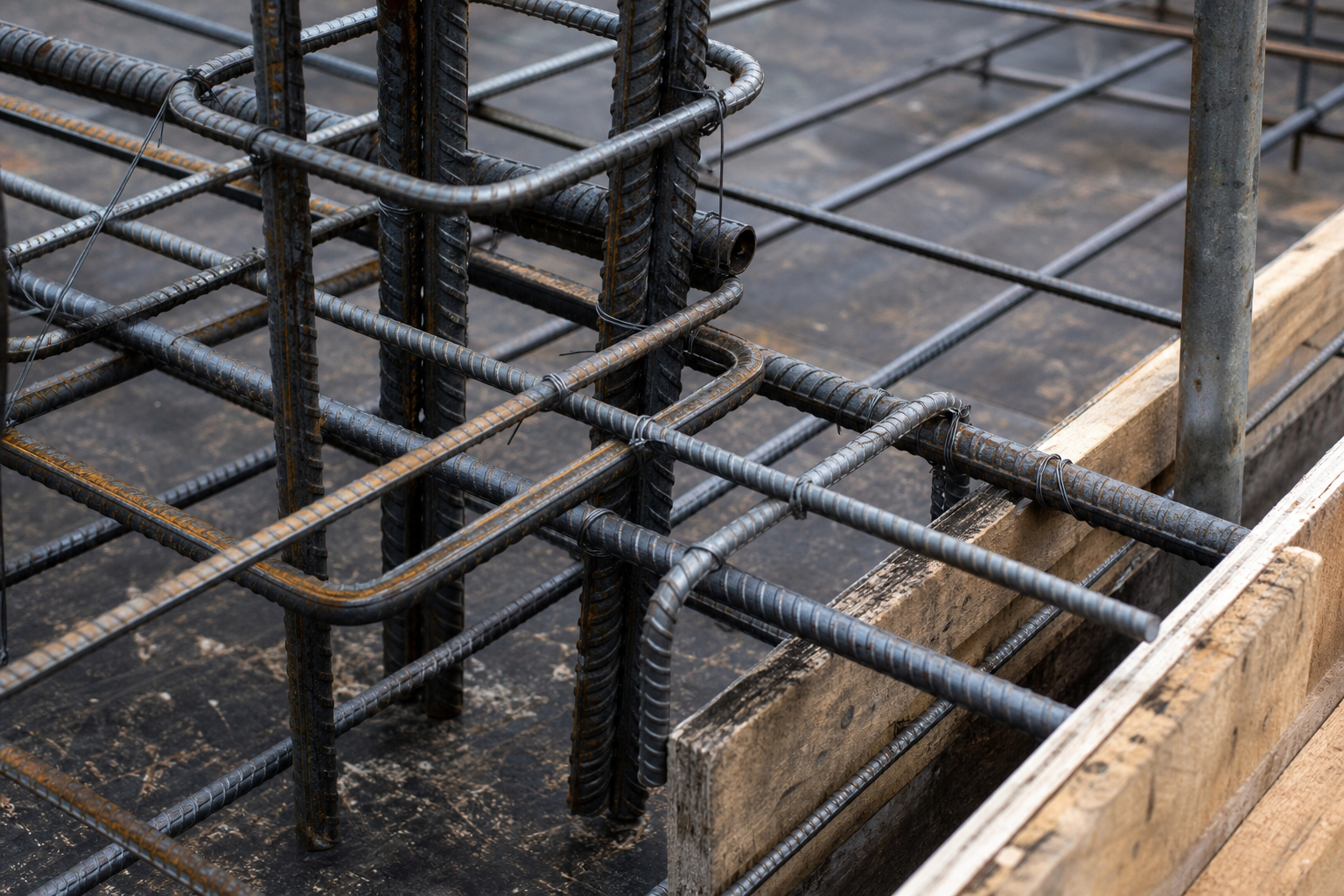
Mesh lap length is one of the simplest reinforcement requirements on paper and one of the most frequent causes of pour delays on site. At Konstruct Steel Fixing PTY LTD, we treat lap verification as a first-class activity — not something left to the end of the shift when the concrete truck is already booked.
On South Australian slabs — whether ground-bearing residential plates in the northern suburbs, suspended decks on mixed-use towers in the CBD fringe, or pavement reinforcement on council road upgrades — mesh sheets arrive with factory dimensions and designated overlap zones. The structural drawing specifies lap length, often referencing AS 3600 and project-specific engineer details. What goes wrong in practice is rarely ignorance of the standard. It is the combination of tight programmes, multiple mesh types on one pour, amended sheets arriving late, and crews working to habit rather than to the issued schedule.
Why laps fail inspection
Engineer hold points on mesh typically focus on three things: correct sheet type and orientation, support and cover, and lap length at every joint. Laps fail for predictable reasons. Sheets are butted without overlap because the laydown area was short and someone assumed the adjacent bay would compensate. Lap length is measured from the wrong reference edge after a trim. A revised detail called for 300 millimetres but the crew continued with 200 because the earlier revision was still taped to the hoarding. Edge mesh is lapped correctly in the field but clashing with penetrations forced a local shift that shortened the overlap below minimum at one corner — and that corner is exactly where the inspector starts.
We have seen pours held on multi-lot townhouse projects across Adelaide's growth corridors for a single non-compliant lap at a step-down between garage slabs and external pavement. The cost is disproportionate: crane time, pump standby, curing programme knock-on, and strained relationships between builder, engineer and concrete supplier. Our view is that these holds are avoidable when lap verification is built into the fixing sequence rather than bolted on at handover.
Our on-site verification method
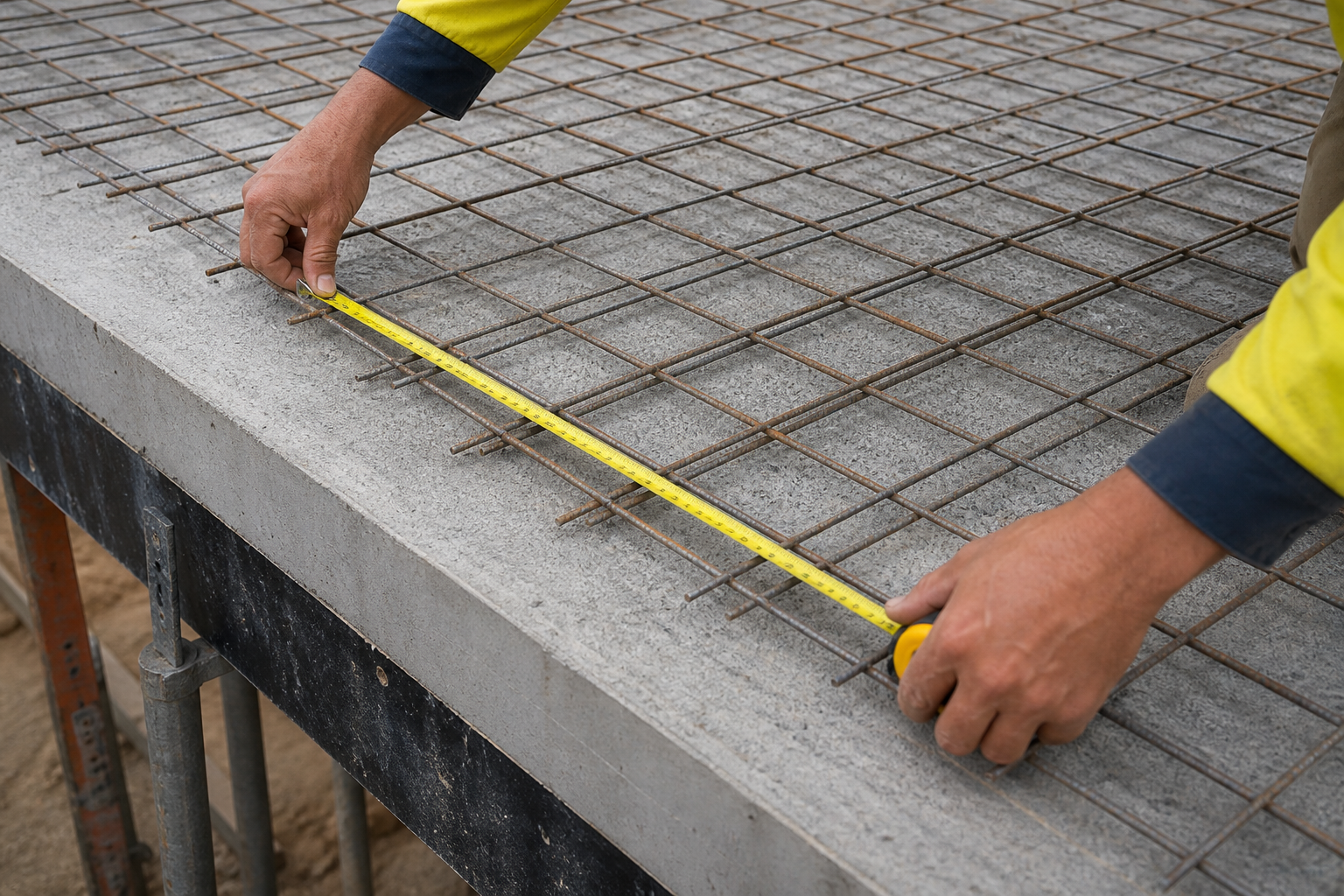
Before mesh is declared complete in any pour zone, our leading hand walks the area with the issued reinforcement schedule and marks lap centres at sheet joints using chalk or survey paint — not as decoration, but as a control measure. Each lap is measured with a tape at right angles to the joint. Where sheets are trimmed, we record the trim location against the drawing grid so the engineer can reconcile field conditions with design intent. Photographs are taken at joints where detail is congested or where RFIs have altered the standard lap.
We also verify that laps occur over support — mesh lapped in mid-air between chairs is a common defect on suspended slabs where top and bottom layers are separated. Bottom mesh must bear on chairs at lap zones; top mesh must maintain cover to the top surface while achieving overlap with the adjacent sheet. In SA summer conditions, crews sometimes rush the final bays before heat affects productivity. Our foremen are instructed to close out lap checks before lunch on pour-eve, not after the last sheet is dropped.
Coordination with supply and drawings
Mesh lap problems often begin before steel reaches site. If the bill of materials does not match the latest drawing revision, sheets may be ordered to lengths that force extra joints — multiplying lap risk. We review mesh schedules at tender and again at pre-start. Where we are engaged under a lump-sum fixing package, we raise discrepancies early with the builder rather than improvising on the day. South Australian fabricators and distributors have reliable lead times for standard SL and RL sheets, but non-standard gauges and cut-to-size orders can extend delivery. Programme float should sit in the fixing window, not in the lap tolerance.
When drawings show staggered laps or alternate sheet layouts for construction joints, we sequence fixing so the critical joints are completed first and inspected before secondary areas. On larger commercial plates, we partition the slab into pour zones aligned with concrete construction joint locations. That discipline reduces the chance that a last-minute joint introduction creates unplanned mesh breaks.
Residential versus commercial expectations
On residential work, mesh fixing is sometimes treated as a low-skill activity compared with bar fixing on suspended structures. Our experience across Adelaide volume housing and medium-density projects contradicts that assumption. Ground slabs with step-downs, rebate details at alfresco edges, and integration with rib-and-infill systems all introduce lap complexity. We apply the same verification standard to a 120-square-metre house plate as to a 1,200-square-metre commercial deck because the inspection consequence is identical: no pour until compliant.
On commercial and high-rise packages, mesh may be only one layer in a dual-mesh system with additional bar chairs, penetrations and post-tensioning ducts. Laps must be coordinated with PT profile and conduit sleeves. We hold coordination meetings with other trades before mesh delivery where the programme is compressed. That is standard practice on our tower work in the city and inner suburbs.
Konstruct position: We will not sign off a mesh zone for engineer inspection until every joint has been measured, marked and reconciled to the current drawing. If a lap cannot be achieved without a site-specific RFI, we stop and escalate — we do not pour on verbal assurances.
Documentation and handover
Our pre-pour handover includes a lap register for zones where the engineer has requested it or where the project quality plan mandates photographic records. The register lists grid references, sheet types, specified lap, measured lap and leading hand initials. This takes minutes when done during fixing and saves hours when an inspector queries a single joint at 6:00 am on pour day.
For builders and project managers engaging steel fixing subcontractors in South Australia, we recommend making lap verification an explicit scope item in the trade package — not buried in a generic "comply with AS 3600" clause. Ask how your fixer measures laps, who signs off, and what happens when drawings change 48 hours before concrete. The answers tell you whether mesh is a controlled process or a programme gamble.
Mesh lap lengths are not glamorous. They are structural. Getting them right is part of what separates professional steel fixing from steel placed in a hurry — and it is one of the reasons Konstruct has built repeat work with builders who have been burned by pour holds they did not see coming.
Climate and seasonal factors in SA
South Australian summer heat affects pour timing — and therefore the fixing window before each pour. Early-morning concrete placements compress the prior day's fixing and inspection window. We plan mesh completion and lap verification to finish before trade heat stress peaks, maintaining measurement discipline when crews are under time pressure. Winter rains on exposed ground slabs can soften subgrade and displace chairs; we re-walk mesh support after significant rain before calling a zone inspection-ready. Seasonal programme pressure is not an excuse for shortened laps — it is a reason for clearer lookahead between builder, fixer and inspector.