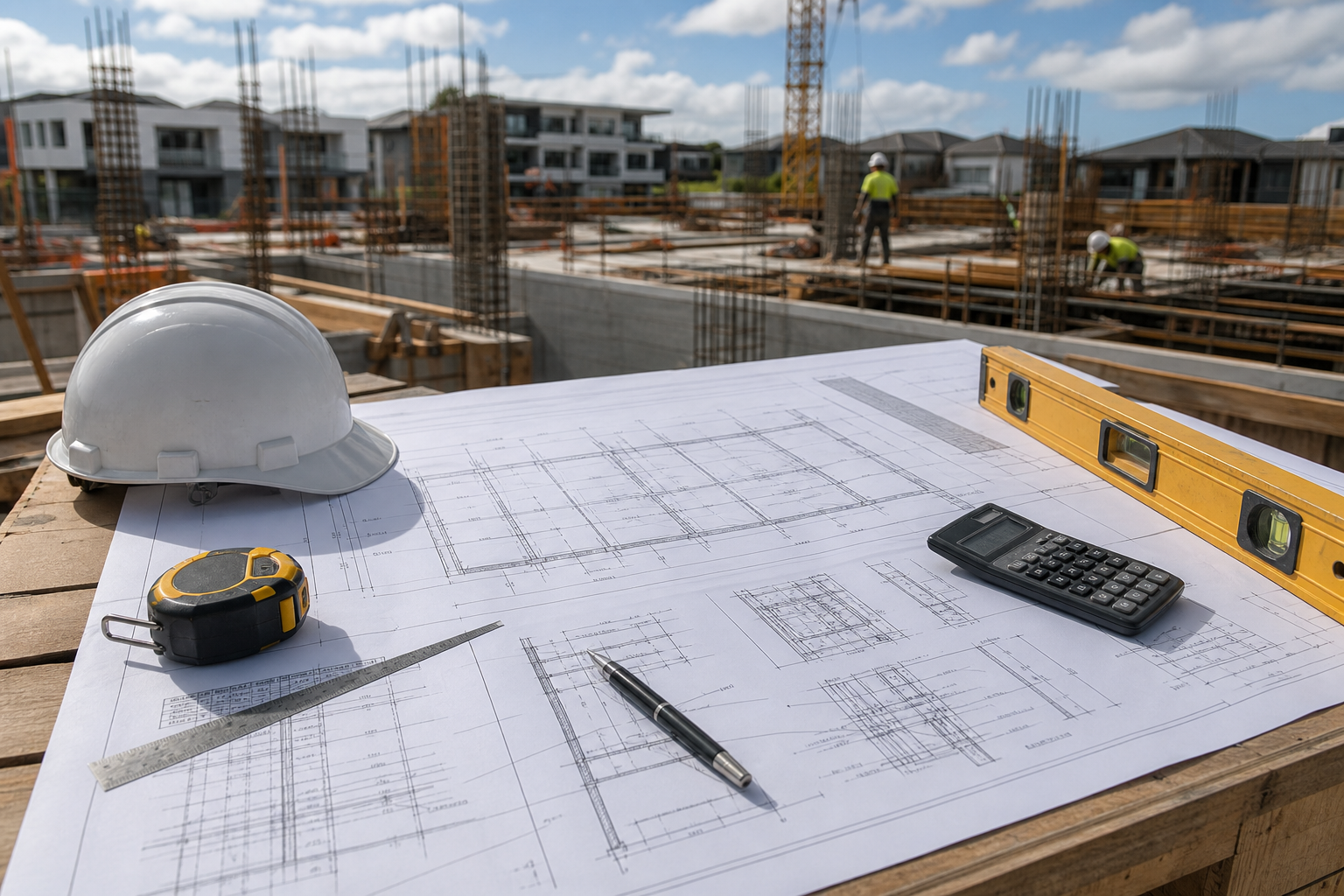
Drawing revisions are not interruptions to steel fixing — they are part of steel fixing. The contractors who protect programme are not the ones who ignore RFIs; they are the ones who absorb changes with disciplined revision control, clear communication and realistic re-sequencing.
Konstruct Steel Fixing PTY LTD works from issued-for-construction structural drawings like every trade. On active South Australian sites, those drawings change: survey adjustments, architectural floor plan tweaks, services clashes, geotechnical updates, and value engineering after tender. Our job is to place steel that matches the engineer's current intent. Our challenge is to do that without losing the pour window or creating scrap and rework that erodes margin for everyone.
Revision control on site
We maintain a drawing register at the fixing gang's work point — paper or digital, but always current. Superseded revisions are removed, not left stacked where someone might fix from the wrong sheet. When a new revision issues, the foreman marks affected zones on a site copy and stops work in those areas until the change is understood. Continuing with outdated details is faster for an hour and expensive for a week.
We ask builders to distribute structural revisions to steel fixing the same day they issue to site management — not via a document portal we discover three days later. On projects with frequent RFIs, we nominate a single coordination contact on each side to avoid conflicting verbal instructions.
Assessing impact before re-mobilising
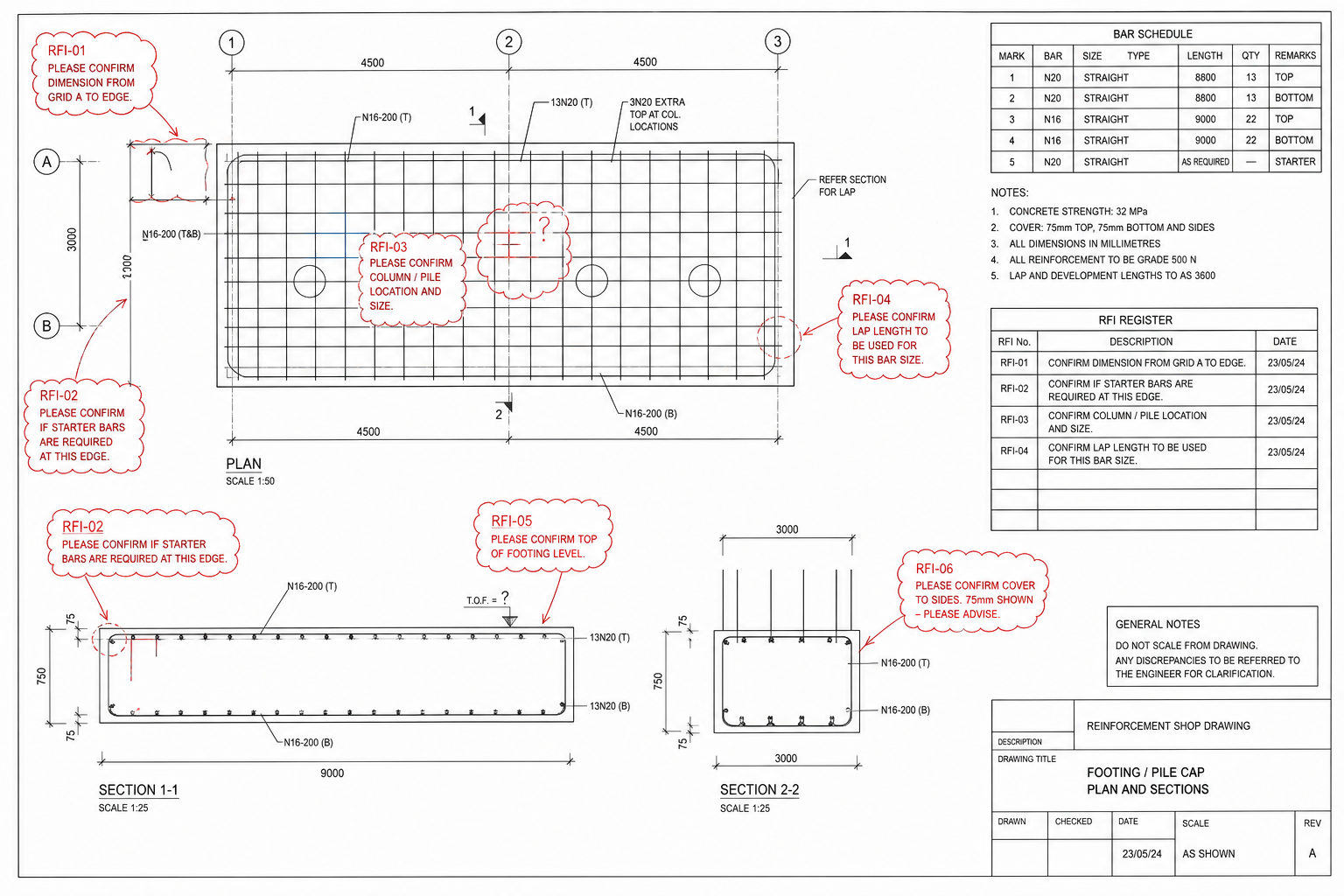
Not every revision requires full re-fix. A typographical correction with no field impact is logged and filed. A changed bar spacing across half a slab requires re-measurement and possibly removal of steel already placed. We assess impact in three categories: no field action, localised adjustment, and strip-and-refix. That assessment is communicated to the builder within hours, with a realistic time allowance before inspection can be re-booked.
Where revisions arrive after concrete is poured in adjacent zones, continuity bars and dowels must be reconciled with what is already cast. We photograph cast-in conditions before fixing continuation steel so disputes are rare.
Programme protection without corner-cutting
Protecting programme does not mean pouring non-compliant steel. When a revision compresses the fixing window, we respond with crew reallocation, extended shifts where site rules permit, and zone prioritisation — not with skipped laps or missing chairs. If the window is genuinely unachievable, we say so early enough for the builder to shift concrete or issue a controlled construction joint.
On Adelaide multi-lot projects, repeated small revisions across stages can fatigue site teams. We track revision frequency in our internal job log and raise pattern issues at site meetings — for example, recurring set-down changes that suggest upstream coordination gaps worth fixing once rather than fighting on every lot.
Commercial clarity
Steel fixing variations belong in a clear contractual framework. We price tender drawings; changes outside that scope are assessed and quoted in line with our contract. Ambiguity breeds resentment. Early agreement on how RFIs are valued — time and materials versus lump sum — keeps relationships intact when drawings move.
Konstruct position: We do not implement verbal revisions. Written instruction — RFI response, revised drawing, or site instruction referencing an engineer's direction — is required before steel changes in the field.
Technology and traceability
Where builders use digital document control, we align with their platform for revision alerts. Physical site conditions still require physical verification — a PDF timestamp does not prove the gang saw the update. Our foremen sign acknowledgment on significant revisions.
Common revision types on SA building sites
Architectural set-down changes at bathrooms and balconies frequently alter reinforcement levels on residential slabs — we treat these as field-verified items even when the revision appears minor on paper. Services clashes with slab penetrations often arrive late via hydraulic shop drawings; we assess impact on top mat chairing and edge bars before confirming pour readiness. Geotechnical revisions affecting footing depths can obsolete starter bar lengths already placed — early communication from the builder when geotech advice changes is essential to avoid strip-and-refix costs.
On civil packages, council standard drawing updates and authority RFIs can change culvert face bar details mid-corridor. We maintain chainage-specific revision notes so crews working at the northern end of a job are not fixing to a detail superseded at the southern end.
Practical advice for project teams
Bundle revisions where possible. Issue complete sheets, not fragmentary sketches. Include grid references affected. Tell us the pour date you are protecting so we can triage. If you need a same-day answer on feasibility, call — but send the document too.
Managing drawing revisions without programme slip is a collaboration, not a subcontractor problem alone. Konstruct brings disciplined field control; builders bring timely information and realistic windows. Together, that is how Adelaide sites keep concrete moving when the design evolves — as it always does.