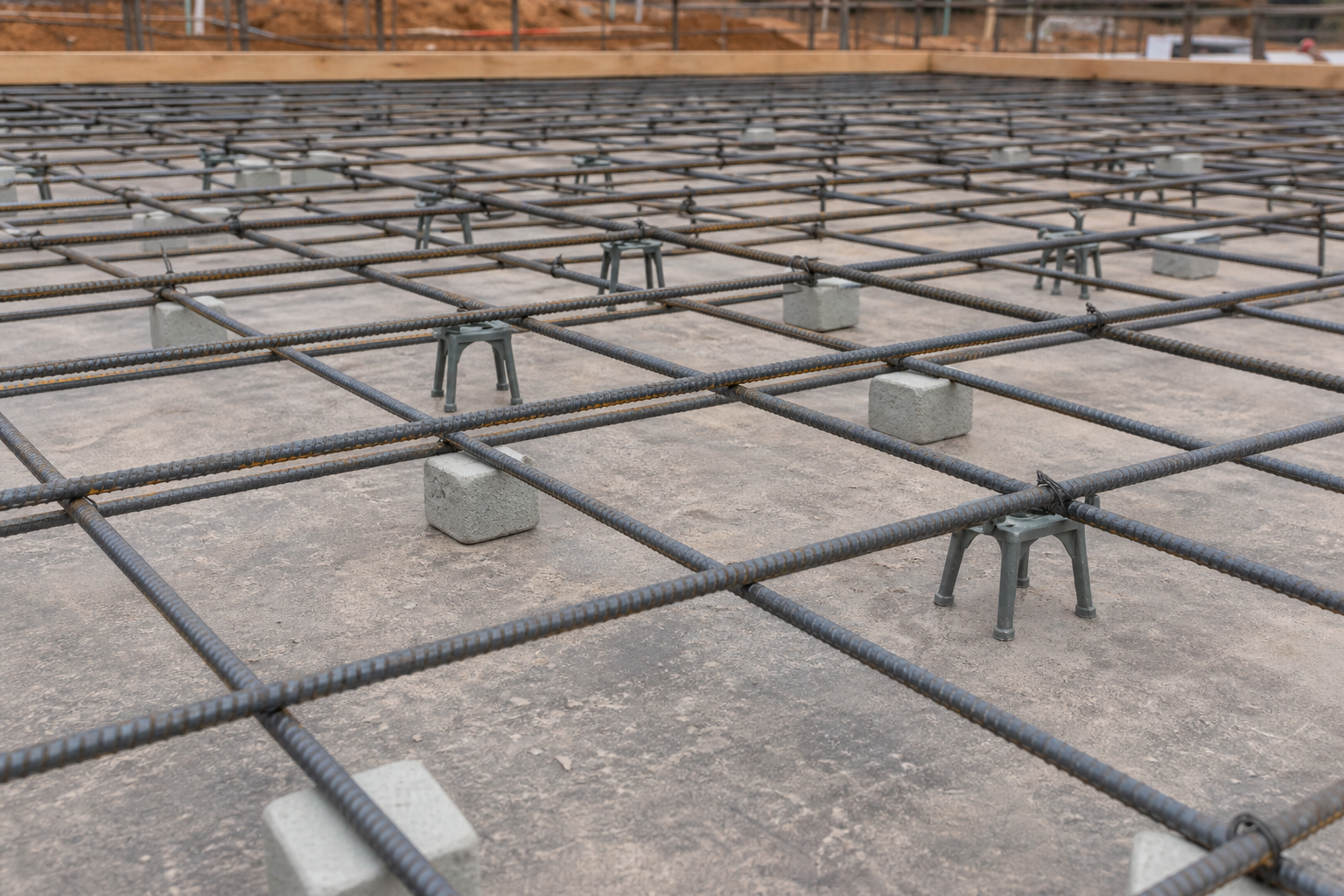
Cover and support are invisible in the finished structure — which is exactly why they are so often wrong when the engineer walks the pour zone the morning concrete is due. Konstruct Steel Fixing PTY LTD treats chairing, spacers and bar support as structural tasks with the same priority as lap lengths and bar schedules.
Australian Standards and project specifications define minimum cover to reinforcement for durability and fire performance. Achieving that cover in the field depends on chairs, spacers, bolsters and tying discipline — not on hope that the mesh will be pressed into position when the concrete vibrator passes. In South Australia's climate, durability requirements for exposure classifications matter on coastal projects from Glenelg to Victor Harbor, on infrastructure near saline groundwater, and on commercial podiums subject to weather during extended construction programmes.
Where cover fails in practice
The most common failure modes we see on inspection are predictable. Bottom cover is lost because mesh sags between chairs that were spaced too far apart for the sheet gauge. Top cover collapses because bar chairs were kicked during other trades' work or were inadequate for the bar weight they carried. Edge cover is compromised at formwork lines where spacers were omitted and the steel was pulled to the face during tying. Double-layer slabs show top layer mesh floating after workers stood on it without spreader boards.
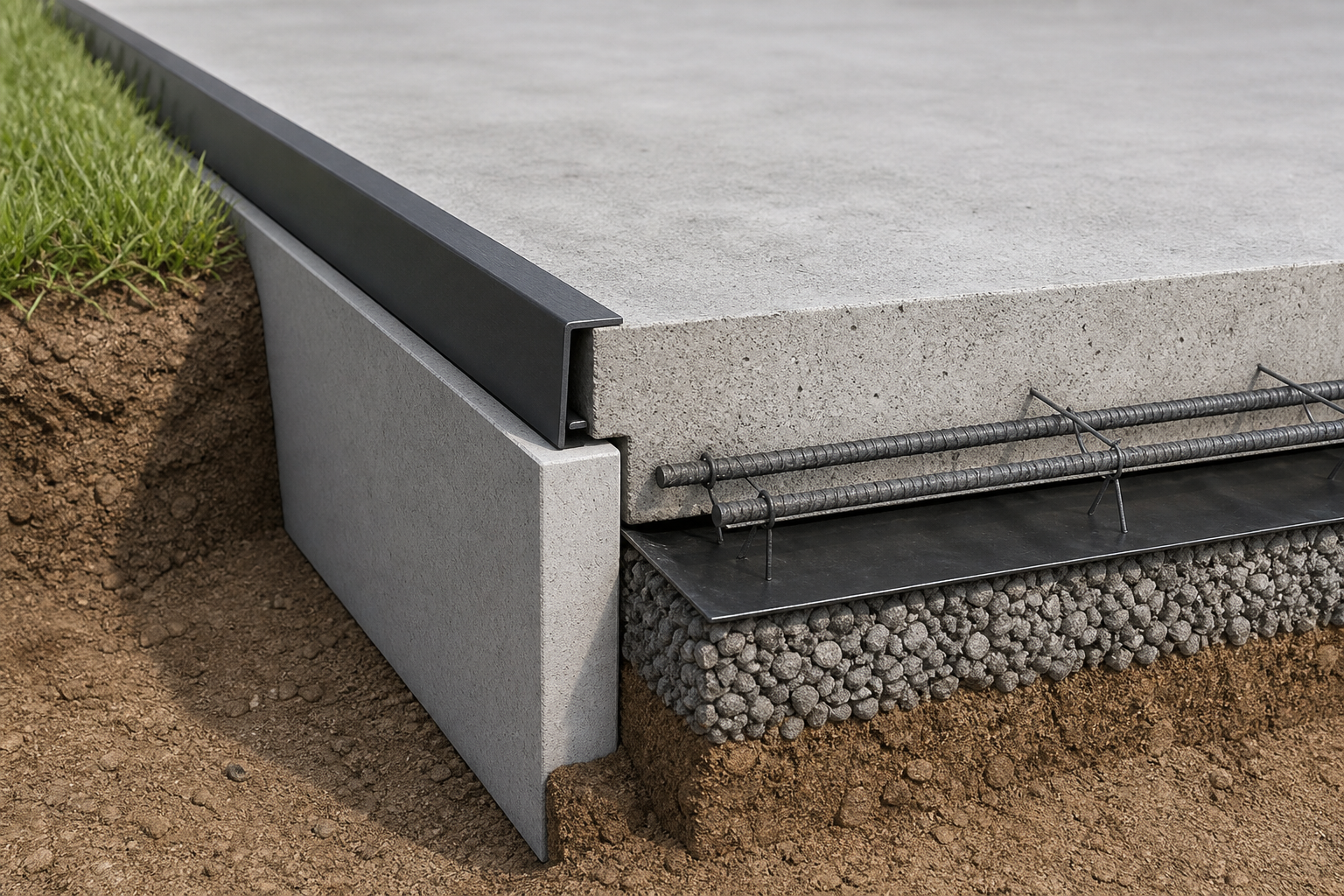
On footing and raft packages — common on Adelaide residential and industrial sites with reactive soils — bar chairs must handle the weight of workers placing bottom reinforcement without punching through the membrane or compressing into the blinding. We use appropriate chair types and densities specified for the bar mass, not the minimum the hardware store had in stock.
Chairs versus spacers: using the right product
Plastic bar chairs, steel bar chairs, mesh bolsters and concrete spacers each have a place. Mixing them without thought creates inconsistent cover profiles. On suspended slabs we prefer chairs with stable bases and clip ties where vibration is expected. On vertical elements we use spacers tied to the bar with the specified tie wire gauge — not soft tie that slips under load.
Bar support for top mat reinforcement in deep beams and transfer structures requires engineered support schemes on some projects. We review those details at pre-start and do not substitute ad hoc timber stacks unless the engineer approves them as temporary support with defined loading limits.
Congested nodes and constructability
Columns, core walls and beam-column joints concentrate steel. Cover at these nodes is checked against the structural detail, not against a generic 40-millimetre rule of thumb. Congestion forces decisions about bar order, U-bars, and whether chairs can physically sit where cover must be maintained. Our leading hands flag congested nodes during fixing — not at inspection — and photograph them when the engineer has requested construction records.
On stair and ramp structures, variable cover along the flight is a frequent oversight. Bars follow the slope; chairs must maintain constant cover to the soffit and tread surfaces. Adelaide multi-residential projects with feature stairs for marketing suites are a recurring example where architectural geometry complicates reinforcement support.
Trade damage after steel is signed off
Steel fixing completion is not the end of cover risk. Plumbers, electricians and surveyors cross completed zones. Formwork crews adjust shutters. We return for pre-pour walks specifically to check chairs disturbed since inspection. Where other trades are active on a completed deck, we ask the builder to define exclusion protocols. When damage occurs, we re-chair and re-inspect — we do not assume yesterday's sign-off still holds.
Konstruct position: Cover is measured, not guessed. Our foremen carry cover gauges on commercial and infrastructure work and spot-check at random grid locations plus every congested node before handover.
Mesh support on ground slabs
Ground-bearing slabs on residential estates and industrial yards often use mesh with chair spacing shown on a typical detail. Variations occur at step-downs, thickening strips and drain grates. We chair mesh at laps and at changes in level where sheets bridge a fall. SA reactive clay sites sometimes specify SL92 or heavier gauges where chair spacing must be reduced — we read the project-specific note, not only the standard detail on sheet S01.
Specification compliance and substitutions
Project specifications sometimes mandate chair types — plastic with defined bases, galvanised steel chairs in certain exposure classes, or concrete spacers for bottom cover on long-life infrastructure. We procure to spec. Unapproved substitution is a quality and contractual risk. If specified chairs are unavailable, we escalate before installation, not after inspection failure.
For builders evaluating steel fixing quotes in South Australia, compare chairing allowances, not just labour rates. A low allowance manifests as under-chaired mesh and pour holds. Konstruct prices support correctly because rework and standby concrete are more expensive than chairs done right the first time.
Cover, chairs and bar support are the quiet discipline of professional steel fixing. They do not feature in marketing brochures, but they determine whether your pour proceeds on schedule — and whether the structure delivers the durability the engineer designed for Adelaide conditions.
Reactive soils and footing cover
Adelaide's reactive clay profiles drive footing and slab detailing that engineers specify with explicit cover and chair spacing notes. On raft and stiffened raft systems, bottom cover to mesh and bar is verified against the geotechnical design intent — not only the structural detail. We read the geotech and structural package together where chair spacing and bar support affect long-term performance. Under-chaired mesh on a reactive site is a durability failure waiting for inspection, not a productivity shortcut.